Both routes are legitimate, and the right answer depends on your order size and how much control you need. In short: Yiwu suits buyers who want many different items in small quantities and are willing to accept trader margins and limited control over production. Chenghai suits buyers with volume in a defined category who want factory economics, custom moulds, their own packaging and test reports in the factory's name. Most established importers eventually use both.
What exactly is the Yiwu market?
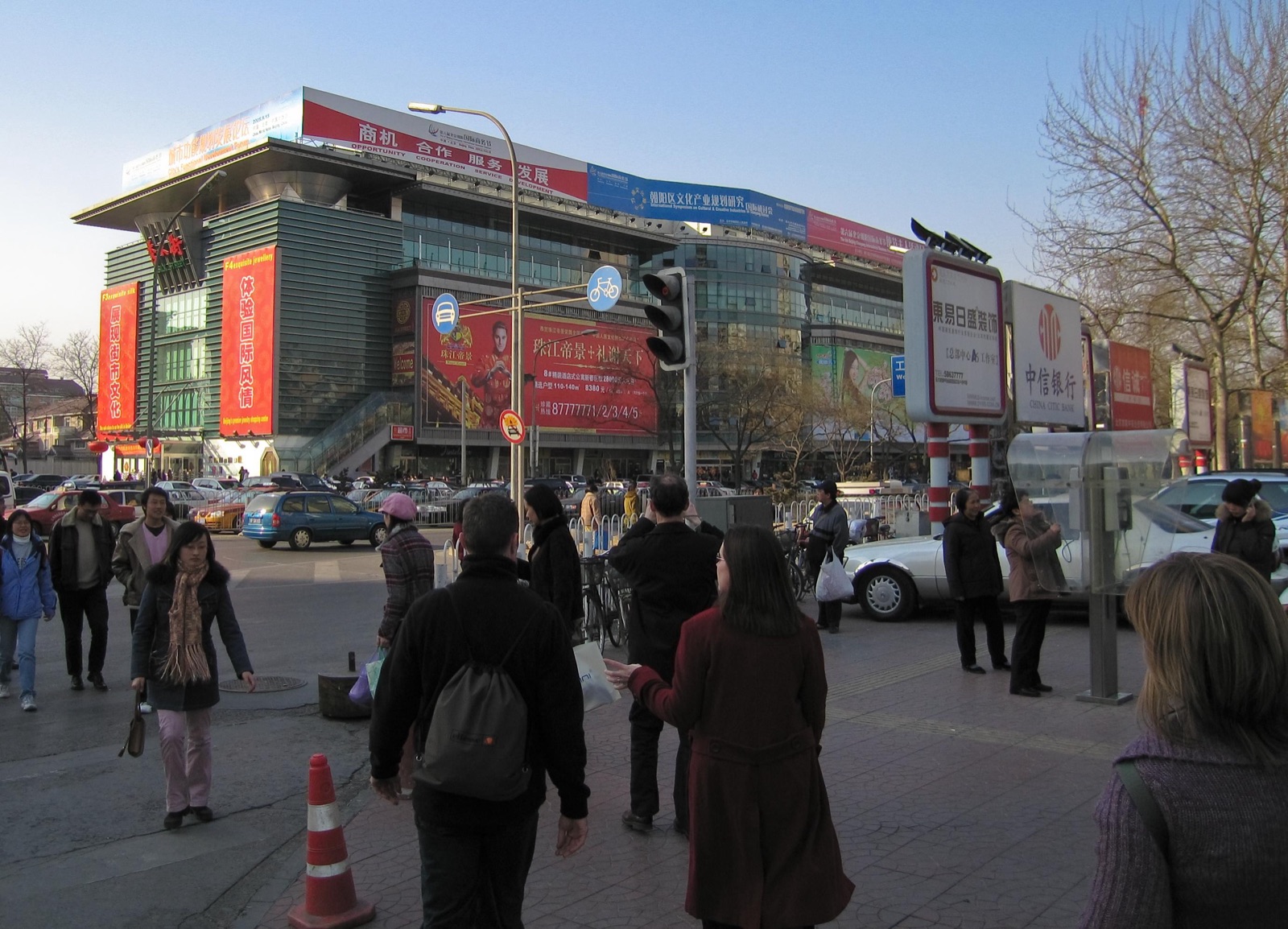
Yiwu, in Zhejiang province, hosts the Yiwu International Trade City — a wholesale complex of tens of thousands of booths spread across several districts. Toys occupy a large section, mostly in District 1. Almost every booth is an agent, distributor or factory sales office rather than the factory itself: the booth holds samples, and orders are relayed to producers in Chenghai, Ningbo, Dongguan and elsewhere.
What that structure buys you is breadth. You can source a hundred different SKUs across toys, stationery, party goods and household items in one week, in cartons rather than container loads, and consolidate them into one mixed container. That is genuinely difficult to do any other way. The online counterpart, Yiwugo, mirrors much of the market, and 1688 covers the domestic wholesale layer, though both are built for Chinese-speaking buyers.
What is Chenghai and why do toy buyers go there?
Chenghai is a district of Shantou, in eastern Guangdong, and it is the densest concentration of toy manufacturing in the world — heavily weighted to plastic toys: die-cast and friction vehicles, RC cars, building blocks, dolls, water guns, battery-operated and educational plastic items. Thousands of factories and their entire supply chain — injection moulding, tooling shops, electronics assembly, printing, blister and colour-box packaging — sit within a short drive of each other.
Buying there means dealing with the producer. That gives you the tooling conversation, the material specification, the ability to change a colour or a package, and test reports issued in the manufacturer's own name. It also means MOQs measured per item rather than per carton, and a supplier who expects a serious commitment before they open a production slot.
Yiwu vs Chenghai: side-by-side
| Factor | Yiwu market | Chenghai factories |
|---|---|---|
| Who you buy from | Mostly traders, agents and sales offices | The manufacturer directly |
| Product range | Very wide, across many categories | Deep but narrow — mainly plastic toys |
| Minimum quantity | Low; often a carton or a few cartons per item | Higher; usually thousands of pieces per item |
| Unit economics at volume | Includes a trading margin | Better at volume, since you buy at source |
| Customisation | Limited; usually stock designs and stock packaging | Full OEM/ODM: colours, moulds, logo, private-label packaging |
| Certification control | Reports often belong to a third party | EN 71 / ASTM F963 testing arranged on your production, in the factory's name |
| Quality control | Harder — you rarely see the production line | Inspectable during and after production, to AQL levels |
| Container type | Ideal for mixed FCL from many booths | Single-factory FCL, or LCL/consolidation for smaller volumes |
| Lead time | Short — much is in stock | Longer — production is scheduled, tooling longer still |
| Best for | Retailers, wholesalers, variety and party stores, new importers testing a market | Brand owners, chain retail, distributors with repeat volume |
Who should buy in Yiwu?
Yiwu is the better fit if you recognise yourself in this list:
- You run a general or variety retail business and need many SKUs, not many pieces.
- You are testing a new market and want a broad assortment before committing to volume.
- Your seasonal peaks — back to school, Ramadan and Eid, Christmas — need speed and stock availability more than custom design.
- You want one mixed container combining toys with stationery, home goods or party items.
Who should buy direct from Chenghai?
Chenghai is the better fit when:
- You reorder the same items and your annual volume in one category is significant.
- You sell under your own brand and need private-label packaging, your logo and your barcode.
- Your market enforces documentation seriously — EN 71 in Europe, ASTM F963 in the United States, GSO/SASO and SABER in the Gulf, CCC for goods sold inside China — and you need test reports tied to your actual production.
- You need product changes: a different motor, safer battery compartment screws, a modified mould, a specific plastic grade.
Can you combine both?
Yes, and that is what most experienced importers do. The usual structure is a core-and-tail assortment: your best-selling core items are produced in Chenghai at factory terms with your own packaging and certification, while the long tail of low-volume novelty and seasonal items comes from Yiwu, where nobody expects you to order thousands of pieces.
The obstacle is logistics. Goods from two provinces, several suppliers and different production dates have to arrive at one warehouse, be checked, repacked if needed, and loaded into a single container. Without a warehouse in China you either ship two half-empty containers, pay LCL rates on both, or trust each supplier to send goods to a forwarder and hope the counts match. This is precisely where a consolidation partner changes the economics — and it is the single most common reason buyers stop trying to run both routes alone.
What is hard about doing this alone?
Both routes share the same difficulties. Verifying that a supplier is what it claims requires a physical visit — a Yiwu booth tells you nothing about the factory behind it, and a slick Chenghai catalogue can belong to a workshop with three machines. Negotiation happens in Chinese, and prices, MOQ and payment structure move considerably once the conversation is not conducted in English through a sales representative. Quality problems tend to surface after payment, when your leverage is gone. And a first-time buyer has no relationship history, which is exactly what makes factories flexible on minimum quantities.
How The China Toys handles both routes
The China Toys is based in Guangzhou with more than 15 years in toy sourcing, a network of 500+ vetted factories, importers served in 40+ countries, and 500+ containers shipped per year. We buy in the Yiwu market and we buy direct in Chenghai, and we combine both in one shipment.
Send us your item list and target market. Within a few hours or days you receive offers from the best factories, in quantities that fit your needs — because standing relationships across many factories move MOQs that a first-time buyer cannot move alone. We negotiate in Chinese, verify each supplier physically, issue clear contract terms that protect you from surprises, arrange EN 71, ASTM F963 or GSO/SASO testing where your market requires it, inspect to AQL before the balance is paid, and consolidate multiple factories into one FCL or LCL shipment with sea or air freight and customs clearance to Jebel Ali, Jeddah, Dammam or your own port. You pay only a deposit to start.
Tell us what you are buying
Send your product list, quantities and destination market and we will tell you honestly which items belong in Yiwu and which belong in a Chenghai factory. Email [email protected], WhatsApp +8617702000155, WeChat YOSRI 尤斯里. Office: Office 812-B99, 8th Floor, Annex Building, No. 188 Linhe Middle Road, Tianhe District, Guangzhou City, Guangdong Province, China.
Frequently asked questions
Is Yiwu cheaper than buying from a factory?
Not usually at volume. Yiwu booths add a trading margin, so once your quantity per item is large enough to interest a factory, buying direct is normally better on unit economics. Below that threshold, Yiwu is often the only practical option and the margin buys real convenience.
Can I mix Yiwu goods and Chenghai goods in one container?
Yes, if someone in China consolidates them. Goods from Zhejiang and Guangdong must be gathered at one warehouse, checked and loaded together. Without that, most buyers end up shipping LCL twice or waiting for one supplier to finish before the other's stock is ready.
Do Chenghai factories accept small orders?
Sometimes, but rarely for a first-time buyer with no history. MOQs are set per item and per colour and are influenced by mould setup and material batches. Buyers who order through a partner with standing relationships across many factories generally get lower minimums than they can negotiate alone.
Which route is better for private label?
Chenghai, clearly. Private label needs control over packaging artwork, logo placement, barcode, and test reports issued against your production. A Yiwu booth normally sells stock designs in stock packaging, which is fine for resale but not for building a brand.