Chenghai, a district of Shantou in eastern Guangdong, is not simply a city that happens to contain toy factories. It is a specialised industrial ecosystem. Thousands of production units — from large export-licensed plants down to single-floor workshops — operate within a radius of a few dozen kilometres and share the same pool of mould makers, resin traders, micro-motor suppliers, printers and packaging houses. Buyers who understand that structure source far better than buyers looking for "one factory that does everything".
How is the Chenghai cluster organised?
The structure is both vertical and horizontal. At the top sits a limited number of large factories with direct export licences, substantial injection-moulding halls, and separate departments for quality control and documentation. Below them is a broad layer of mid-sized factories producing under other people's brands. At the base are hundreds of small workshops that specialise in a single operation: moulding only, spraying only, or hand assembly only.
This means the "factory" selling you a toy may in practice be coordinating five workshops. That is not a defect in itself — it is an efficient model and it keeps costs down — but it does mean responsibility for quality is distributed. The buyer's job is to know who carries final accountability.
What does Chenghai actually produce best?
| Category | Depth of specialisation in Chenghai | What it means for an importer |
|---|---|---|
| Injection-moulded plastic toys | Very high | Widest existing mould library, fastest sampling |
| Die-cast vehicles | High | Dedicated lines, but metal tooling is slower and costlier to set up |
| RC (radio-controlled) toys | High | Often depends on electronics and battery suppliers outside the cluster |
| Building blocks and construction sets | Medium to high | Mould precision is the real difference between suppliers |
| Plush and soft toys | Relatively low | Other Chinese clusters are stronger here |
| Wooden toys | Low | Better sourced elsewhere in China |
What is the difference between a big export factory and a small workshop?
- Licence and paperwork: an export-licensed factory ships under its own name and issues export documents directly; a workshop sells domestically and needs an intermediary to complete the export.
- Testing: larger plants are used to EN 71 and ASTM F963 reports and know how to keep materials consistent between production runs.
- Minimum order quantity: workshops accept smaller runs, but with less consistency in colour, weight and packaging.
- Continuity: a large factory stores the tooling and can repeat the same specification a year later; a workshop may have closed or changed products.
- Private label: real OEM/ODM — custom tooling, your own packaging — needs a factory with an engineering department, not an assembly shed.
How does the supply chain around the factories work?
Three supporting trades decide the quality of your product more than the factory's name does:
- Moulds: tooling shops are usually independent businesses. Mould quality determines fit, flash and how many cycles the tool survives. Always ask who owns the mould after it is paid for, and who physically stores it.
- Printing and spraying: labels, tampo printing on the body, and paint are frequently subcontracted. This is where most colour-matching and paint-adhesion problems appear.
- Packaging: colour boxes, blister cards, hang tags and shrink film come from separate suppliers. Packaging is the first thing your customer sees and the first thing sacrificed when a deadline slips.
What does a factory visit actually look like?
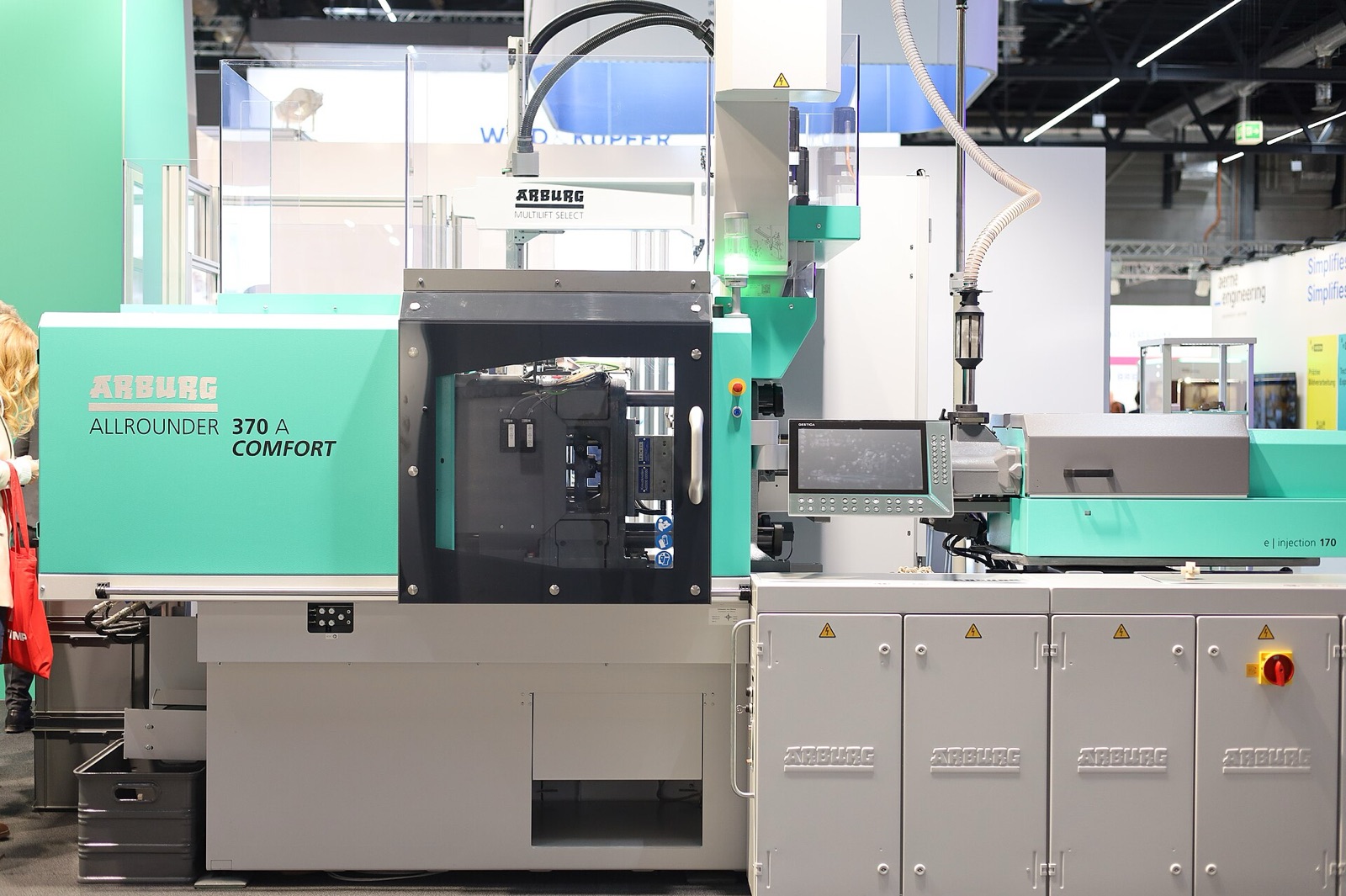
A serious visit is not a walk through the showroom. It starts in the moulding hall: are the machines running now, is raw material stored and labelled, is there scrap discipline? Then the assembly line: how many workers, and is there in-line inspection or only a final check? Then the warehouse: is there finished stock packed under other customers' brands — practical evidence that exporting is routine here? Finally the retained-sample room and the records: past test reports, batch logs, and tooling stored with numbered racks.
The practical rule: ask to see the product you want while it is being produced, not while it is sitting in a display case.
How do you tell a real factory from a trading office with a showroom?
- Ask for a photo or live video from the moulding hall with your item's tool visible in the machine.
- Compare the company name on the contract, the invoice and the export documents. A mismatch is not proof of fraud, but it deserves an explanation.
- Ask how many injection machines they run and their clamping tonnage. A factory answers instantly; a trading office hesitates.
- Request one item clearly outside their specialty. A trading office agrees to everything; a factory says "that is not what we make".
- Watch for an over-broad catalogue. A supplier showing every category usually manufactures none of them.
To be fair: an intermediary is not automatically a bad partner, and many trading companies in Shantou provide excellent service. The problem arises when you pay a factory-direct price believing you are dealing with the plant, while in reality nobody is accountable for the production line.
Why working with The China Toys is easier than facing the cluster alone
Verifying a Chenghai factory takes physical presence, negotiation in Chinese, and weekly follow-up during production. At The China Toys we have been doing exactly that for more than 15 years, with 500+ vetted factories in our network, importers served in 40+ countries, and 500+ containers shipped per year. Standing relationships produce prices and minimum order quantities a first-time buyer cannot negotiate alone, in quantities that fit your needs.
We handle factory vetting, price negotiation, quality inspection before the balance is paid, consolidation of several factories into one container, and sea or air freight with customs clearance. You work with clear contract terms that protect you from surprises, you pay only a deposit, and within a few hours or days you receive offers from the best factories in the vetted factory network we work with.
Talk to us
Send us the product description, an approximate quantity and your target market, and we will come back with real factory options. Email [email protected], phone or WhatsApp +8617702000155, WeChat YOSRI 尤斯里. Our office: Office 812-B99, 8th Floor, Annex Building, No. 188 Linhe Middle Road, Tianhe District, Guangzhou City, Guangdong Province, China.
Frequently asked questions
Do I need to visit Chenghai in person before ordering?
No. A visit helps build the relationship and understand capability, but what actually protects an order is independent inspection during production and before shipment, and that can be carried out on your behalf.
Is Chenghai cheaper than Dongguan or Shenzhen?
There is no single answer; it depends on the item. Chenghai is usually strongest for plastic, die-cast and RC toys because of supplier density, while Dongguan and Shenzhen tend to lead on products with heavier electronic content.
Who owns the mould I paid for?
The contract has to say so explicitly. Without a clear clause, the tool stays with the factory in practice, and you may find you cannot move production later.
Can products from several factories go into one container?
Yes, and this is one of the biggest advantages of buying from a dense cluster. It requires a warehouse and coordination inside China, which is exactly what multi-factory consolidation covers.