
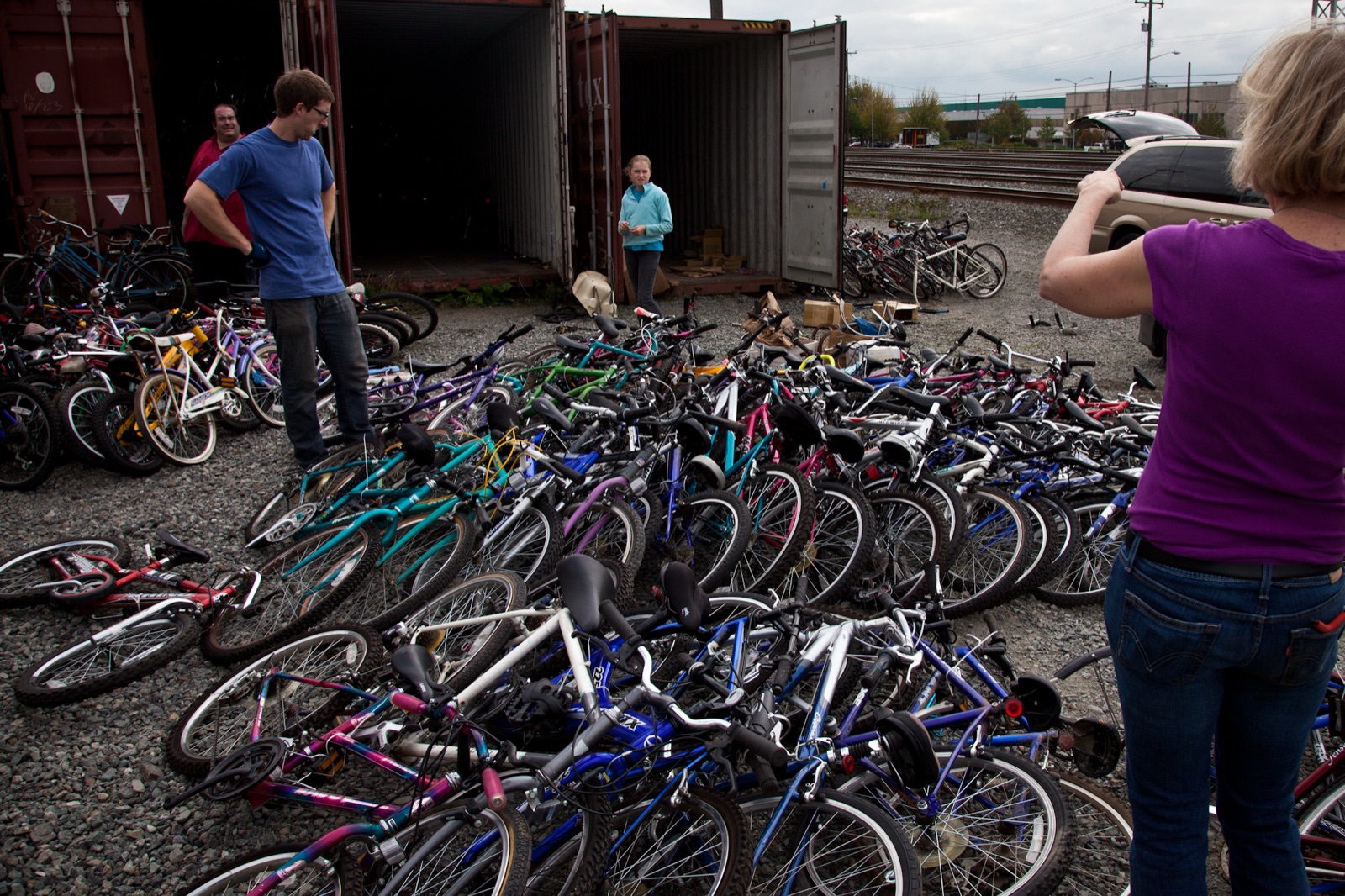
LCL (Less than Container Load) means you pay for the space your cargo occupies inside a container shared with other shippers. FCL (Full Container Load) means you hire the whole container regardless of how full it is. For toys the decision is settled in cubic metres, not kilograms, because toys are bulky and low-density. As a working rule: below roughly 12–15 CBM, LCL usually makes sense; above that, a 20-foot FCL starts to win on total landed cost, transit time and damage risk.
How does each mode actually work?
With LCL, your cargo is trucked to a container freight station (CFS) at the load port, consolidated with other shippers' goods into one container, then deconsolidated at a matching warehouse at destination before it is released to you. With FCL, an empty container is delivered to the factory gate, loaded and sealed there, and not opened again until it reaches you or is selected for customs examination.
The critical difference is how many times your cartons are handled. An LCL shipment is typically handled four to six more times than a factory-sealed FCL container. Every extra handling is another chance for a crushed carton, a mixed-up pallet, or a missing box.
Why does volume, not weight, decide for toys?
Most toy categories — plush, plastic vehicles, building sets, ride-ons, outdoor play, tricycles — occupy a lot of space for very little weight. It is common for a 40-foot high-cube container of plush toys to be completely full by volume while carrying less than a quarter of its permitted payload weight.
The practical consequence is that you are buying space, not tonnage. So the first thing to request from a factory is not the price but the carton dimensions, pieces per carton, and total CBM. Packaging optimisation — reducing dead air inside the box, redesigning the master carton, shipping some items knocked down — often saves more than negotiating the unit price does.
LCL vs FCL compared
| Criterion | LCL | FCL |
|---|---|---|
| Pricing basis | Per CBM or per tonne, whichever is greater | Flat rate per container |
| Suitable volume | Under roughly 12–15 CBM | From about 15 CBM (20ft) or 25+ CBM (40ft) |
| Handling events | High — consolidation and deconsolidation at both ends | Low — sealed at the factory |
| Damage and pilferage risk | Higher | Lower |
| Transit time | 5–12 days longer (waiting to fill and to strip) | Shorter and more predictable |
| Destination charges | Multiple, often unexpected | Fewer and easier to quote in advance |
| Suitability for seasonal orders | Limited | High |
| Multi-factory sourcing | Possible but costly | Efficient via consolidation warehouse |
| Customs examination exposure | Shared container can delay your goods | Only your own cargo is involved |
What is the break-even logic?
LCL is priced per cubic metre, so its cost rises in a straight line with volume. FCL is a fixed price for the box, so its cost per cubic metre falls as you fill it. Those two lines cross. Below the crossing point LCL is cheaper; above it, FCL is cheaper and better. Three things move the crossing point in FCL's favour:
- Destination charges. LCL attracts per-shipment fees at destination that do not scale down with small volumes.
- Damage. Even a small percentage of crushed retail packaging on toys destroys margin, because damaged retail boxes are often unsellable even when the toy inside is fine.
- Time. A missed selling window costs more than any freight difference.
The crossing point also moves with route, season and destination port, so it should be calculated per shipment rather than assumed once.
Which destination charges surprise LCL importers?
An LCL quote usually covers the ocean leg only. At the destination, items appear that were never in the original comparison:
- CFS / destuffing and warehouse handling fees
- Destination terminal handling and delivery-order release fees
- Documentation and local agency fees
- Storage and demurrage, which accrue faster on LCL because the clock starts after deconsolidation
- Customs examination costs, sometimes shared unevenly among the shippers in the same container
Always ask for a quotation that includes destination charges before comparing modes. The headline sea freight number is not the number that matters.
When is LCL still the right choice?
- Testing a new item in your market before committing to container volumes.
- Topping up a fast-selling SKU between two large shipments.
- Shipping trade samples or exhibition stock.
- When cash flow or warehouse space cannot absorb a full container of one category.
How can a mid-size buyer still ship a full container?
Through multi-factory consolidation. Instead of buying 25 CBM from one supplier, you buy 5–8 CBM each from four or five specialist factories — plush from one, die-cast from another, outdoor play from a third — and have all of it delivered to a single consolidation warehouse in Guangzhou or Shenzhen. There the cargo is checked, re-stacked and loaded into one sealed container. You get FCL economics with LCL-style assortment breadth, plus one packing list, one Bill of Lading and one customs clearance instead of several.
This is how most successful mid-size toy importers actually operate: broad assortment, specialist sourcing per category, one container arriving complete. It is also why the choice between LCL and FCL is often not a fixed constraint but a planning decision.
Frequently asked questions
At what volume does FCL beat LCL?
In practice, once a shipment approaches 12–15 CBM a 20-foot container starts competing directly with LCL, and it frequently wins once destination charges and damage risk are counted. The exact break-even moves with route, season and destination, so calculate it per shipment rather than relying on a fixed number.
Are toys more likely to be damaged in LCL?
Yes. Cartons are handled more often and stowed alongside other shippers' cargo, which may be heavy or damp. Use five-ply cartons for fragile items, strapping, clear carton numbering, and loading photographs taken before the container or pallet is closed.
Can goods from different factories go in one container?
Yes. The goods are delivered to a single consolidation warehouse, inspected, and loaded together. You need one consolidated packing list and a commercial invoice that reflects every supplier, which is routine work for an organised consolidation agent.
Which is faster, LCL or FCL?
FCL is almost always faster. An LCL shipment waits for the container to fill at origin and waits again for deconsolidation at destination, typically adding 5–12 days to the door-to-door schedule.
At The China Toys we run both calculations before you buy, and consolidate cargo from a network of 500+ vetted factories into a single sealed container. With more than 15 years of experience and 500+ containers shipped per year for importers in 40+ countries, we work in quantities that fit your needs and with clear contract terms that protect you from surprises. Contact [email protected] or +8617702000155 — Office 812-B99, 8th Floor, Annex Building, No. 188 Linhe Middle Road, Tianhe District, Guangzhou City, Guangdong Province, China.