
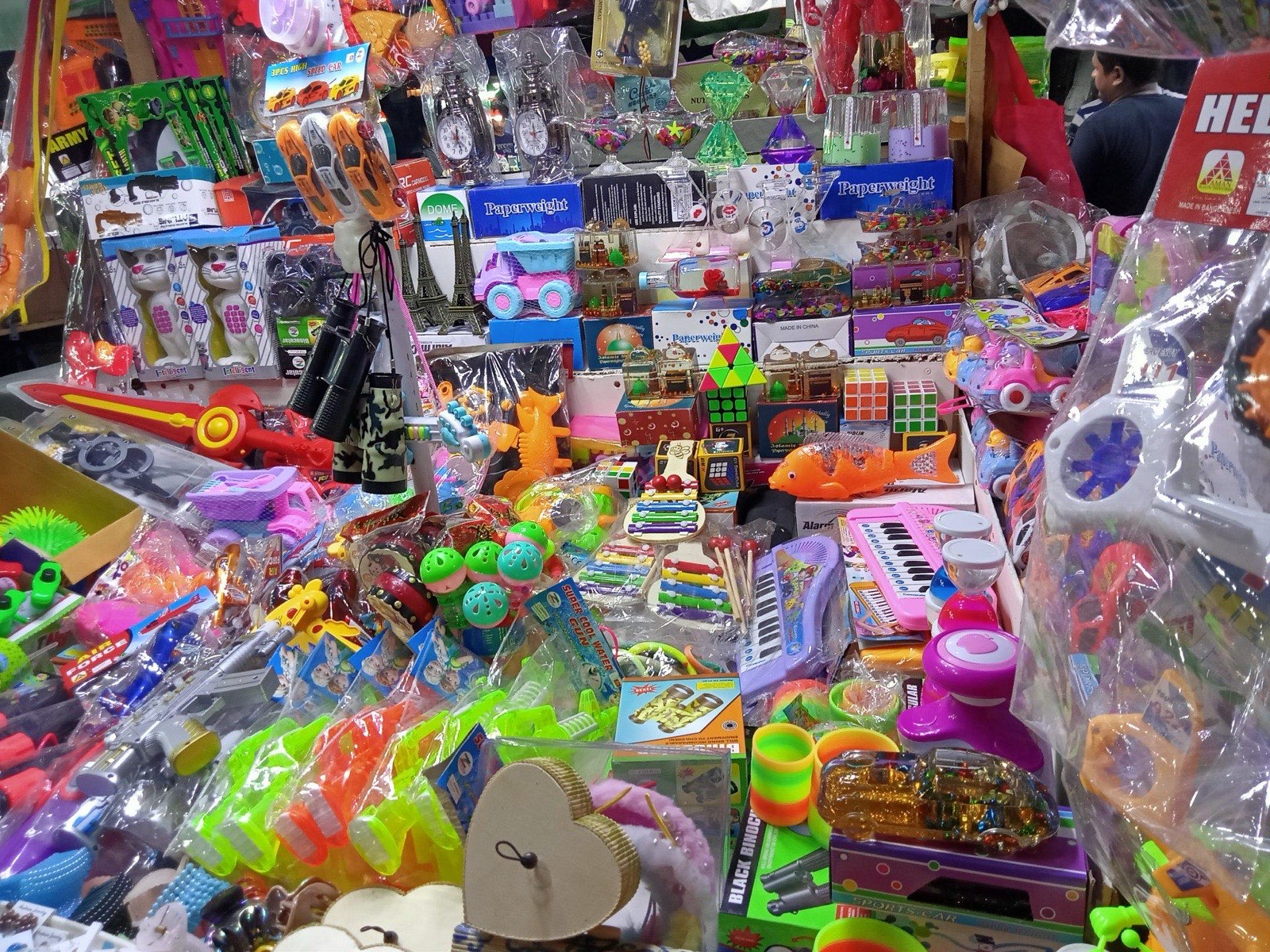
Most of what goes wrong on a first toy shipment from China is predictable. The costly mistakes are: choosing a factory on unit price alone, skipping the pre-shipment inspection, working without a written contract, leaving certification until the goods are already made, ordering too many SKUs in a first shipment, forgetting destination charges and duty, having no retail packaging plan, paying the full amount up front, having no plan for defects and spare parts, and scheduling production straight into the Chinese New Year shutdown. Each one has a practical fix, and every fix is applied before money moves.
Mistake 1: Choosing on unit price alone
The cheapest quote is usually cheapest for a reason — thinner material, lower-grade paint, weaker packaging, or no testing behind it. Unit price is one line in the cost of getting a product onto a shelf.
The fix: compare quotations on landed cost, not factory price. Require every quotation to state material, product weight, packaging, carton quantity and test status, so you are comparing the same product. Ask for a sample from each shortlisted factory before you decide.
Mistake 2: Skipping the pre-shipment inspection
Once the container leaves the port, your leverage is gone. A pre-shipment inspection using AQL sampling is the last moment at which non-conforming goods can be rejected while they are still in the factory and still the factory's problem.
The fix: write inspection into the contract and tie the balance payment to a passed inspection. Agree the AQL levels for critical, major and minor defects in writing before production starts.
Mistake 3: No written contract
A chat thread is not a specification. Without a signed document there is no reference point when the colour, the material or the delivery date turns out differently from what you pictured.
The fix: sign a contract covering specification, the approved sample, payment terms, the inspection standard, the ready date and who pays for rework. Clear contract terms protect you from surprises later, and they cost nothing to put in place.
Mistake 4: Leaving certification until the goods are made
Toy safety requirements differ by market: EN 71 in the European Union, ASTM F963 and CPSIA in the United States, GSO/SASO regulations across the Gulf, CCC for goods sold inside China. Some of these requirements affect the material choice itself, not only the paperwork — and a lithium battery in an electronic toy brings its own transport documentation, including UN38.3 testing for the cells.
The fix: fix the destination market and the applicable standard before production starts, and require test reports from a recognised laboratory. Requirements vary by destination and product category, so confirm the exact scope with your laboratory and your customs broker rather than assuming.
Mistake 5: Too many SKUs in a first shipment
Thirty SKUs from six factories means thirty samples, thirty quality risks and a consolidation problem. First orders are for learning what sells, not for filling a catalogue.
The fix: start with a narrow range of your most likely sellers in quantities that fit your needs, then widen the range once real sell-through data tells you what to repeat.
Mistake 6: Forgetting destination charges and duty
An FOB price stops at the port of loading. Everything after that is a separate line you should budget before you commit.
| Cost category | Where it appears | What drives it |
|---|---|---|
| Ocean freight | Port of loading to port of discharge | Season, route, FCL vs LCL |
| Destination terminal handling | Port of discharge | Port and carrier policy |
| Duty and import taxes | Customs clearance | HS classification, country of origin |
| Compliance and inspection | Before or after arrival | Market regulations, toy category |
| Inland haulage and storage | After clearance | Distance, dwell time |
Loading in Shenzhen/Yantian, Ningbo, Shanghai or Guangzhou/Nansha and discharging in Jebel Ali, Jeddah or Dammam are all normal routings — but the destination-side charges differ port by port, so ask your forwarder for the full breakdown in advance.
Mistake 7: No packaging plan for retail
Packaging is not a cosmetic detail. It carries the barcode, the mandatory language on the label, the age warnings and the importer identification, and it decides how much container volume each unit consumes.
The fix: approve artwork and carton design before production, and check carton quantity and carton dimensions, because they drive freight cost per unit as directly as the product itself.
Mistakes 8, 9 and 10: Payment, defects and the holiday
- Paying the full amount up front. Common commercial practice is to pay only a deposit and settle the balance after a passed inspection or against a copy of the Bill of Lading.
- No plan for defects and spare parts. Agree in writing what percentage of spare parts ships with the order and how defective units are credited on the next order.
- Ordering into the Chinese New Year shutdown. Factories close for a week or more, and the weeks before it are congested for both production and vessel space. The dates move every year, so confirm them with the factory and book early.
The China Toys has worked with toy importers for more than 15 years, with 500+ vetted factories in the network and importers served in 40+ countries. We shortlist factories, lock the specification and the approved sample, run the pre-shipment inspection and arrange freight and customs clearance from our office at Office 812-B99, 8th Floor, Annex Building, No. 188 Linhe Middle Road, Tianhe District, Guangzhou City, Guangdong Province, China — [email protected], +8617702000155.
Frequently asked questions
What is the single most expensive mistake for a first-time toy importer?
Skipping the pre-shipment inspection. Once goods are on the water, fixing a quality problem is slow and expensive, while most defects can still be reworked inside the factory if they are found before shipment.
Do I need a written contract for a small first order?
Yes. A contract is about clarity, not size. It records the specification, the approved sample, the quality standard and the payment terms, which is exactly where first-order disputes come from.
How many SKUs should a first toy shipment contain?
Fewer than most buyers expect. A narrow range means fewer samples, fewer quality risks and a much clearer reorder decision once you see which items actually sell.
How do I avoid the Chinese New Year shutdown?
Approve samples early, fix the ready date in the contract and book vessel space before the pre-holiday rush. The holiday dates change each year, so verify them with your factory rather than assuming last year's calendar.