
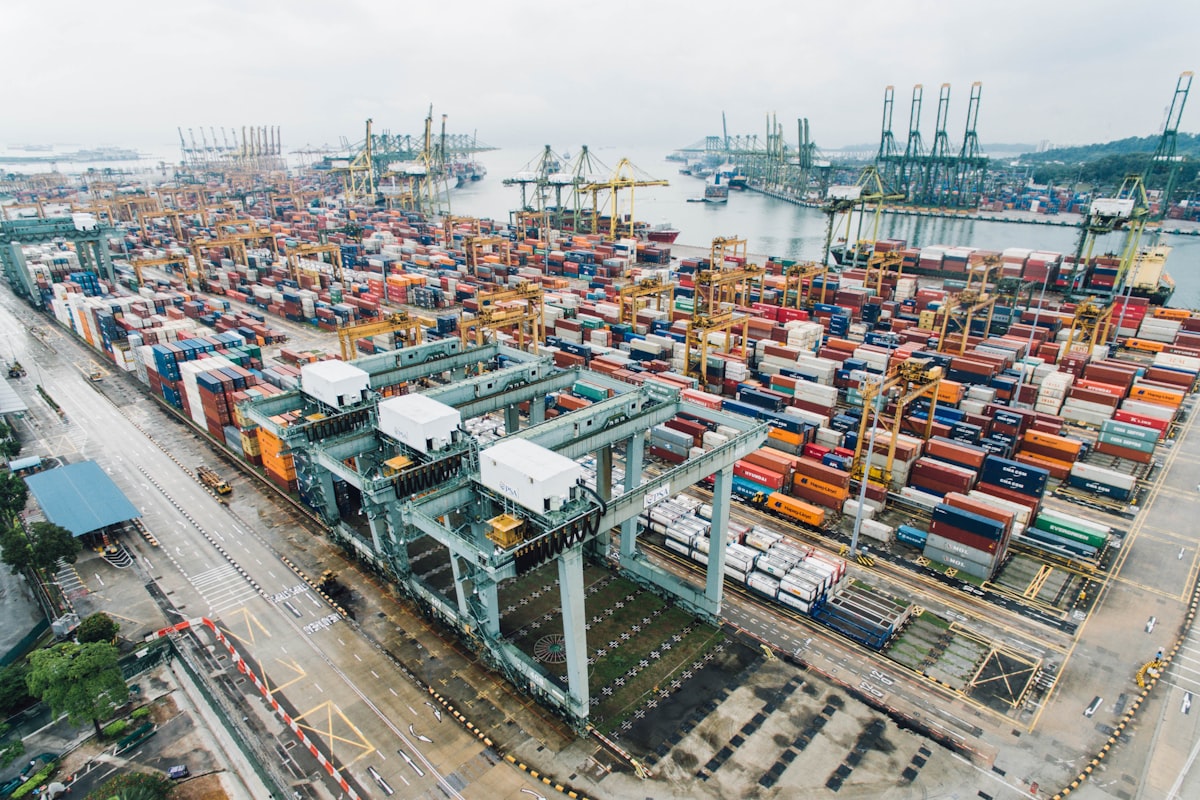
Landed cost is the number that decides whether a toy programme makes money. The unit price quoted by a Chinese factory is only one line inside that number, and importers who plan around it alone are usually surprised at the port. This guide walks through the full cost structure of a toy import and gives you the categories to budget for rather than price tags, because real figures move with product, volume, season and destination.
Everything Starts with the Incoterm
Two quotations for the same toy can differ enormously simply because they use different trade terms. Before comparing suppliers, confirm what each price actually includes.
- EXW (Ex Works): the lowest headline number. The price covers the goods at the factory gate only. Inland trucking to the port, export declaration, terminal handling and everything after it are yours.
- FOB (Free On Board): the most common basis in the toy trade. The supplier delivers the cargo loaded on board at a named Chinese port and handles export formalities. You take over from there and control the freight.
- CIF (Cost, Insurance and Freight): the supplier arranges ocean freight and insurance to your destination port. Convenient, but destination charges, duty, clearance and delivery remain yours, and you lose visibility over the freight component.
For a first order FOB usually offers the best balance: comparable across suppliers, and it leaves you free to appoint your own forwarder.
The Product Price Is Only the Beginning
Inside the unit price, four factors move the number more than anything else.
- Materials and specification: virgin ABS against cheaper recycled resin, battery type, motor quality, fabric weight on plush, print coverage. Every specification you tighten raises the unit price and usually lowers your return rate.
- Order quantity: unit cost falls in steps as volume crosses production run thresholds, not smoothly. Ask each factory where those thresholds sit for your specific item.
- Packaging: colour box, window box, blister card, display carton or a simple polybag. Retail-ready packaging is a meaningful share of item cost and it also fixes carton size, which feeds straight back into freight.
- Compliance level: a toy engineered to pass EN71 or ASTM F963 costs more to produce than an uncertified equivalent. That gap is not padding, it is compliant material and controlled process.
Freight: FCL, LCL or Air
- FCL (full container load): you buy the container, not the space inside it. Once you can fill roughly two thirds of a container, FCL is normally cheaper per unit than LCL and far less exposed to handling damage.
- LCL (less than container load): you pay by volume for a share of a consolidated container. Right for trial orders, but destination deconsolidation charges can be heavy relative to a small cargo volume, so always ask for them to be quoted up front.
- Air freight: priced on chargeable weight, meaning the greater of actual and volumetric weight. Toys are light and bulky, which is the worst possible profile for air. Reserve it for samples, replacement parts and genuine season rescues.
Because toys are volume-driven cargo, packaging engineering is a freight decision. Cartons that stack without wasted headroom, and case sizes matched to container dimensions, reduce the number of containers you ship for the same number of pieces.
Duty, VAT and Clearance at Your Border
This block is set by your own country, not by your supplier. Work through it in order.
- Classify the product under the correct HS code. Most toys sit in Chapter 95, but ride-ons, electronic learning devices and some puzzles fall into different subheadings carrying different rates.
- Confirm the duty rate your customs authority applies to that code, and check whether any preferential agreement between your country and China reduces it.
- Add the consumption tax layer, VAT in Europe and Latin America and VAT in most Gulf states. It is normally calculated on goods value plus freight, insurance and duty, so it compounds on top of everything before it.
- Budget separately for clearance mechanics: customs broker fees, port and terminal handling, storage if the file is delayed, and inland delivery to your warehouse.
Underestimating this block is the most common planning error, because the tax base is larger than the invoice value.
Tooling, Samples and Pre-Production Spend
- Moulds and tooling: required for any custom plastic part or exclusive design, paid once and normally amortised across your first orders. Agree in writing who owns the mould and where it is stored.
- Samples: counter samples, pre-production samples and courier charges between China and your office. Many factories credit sample costs against a confirmed order.
- Artwork and private label: logo plates, printing films, packaging design and barcode setup when the goods carry your own brand.
Testing and Inspection
Two separate items are routinely confused. Laboratory testing certifies that the design and its materials meet the standard of your market, and is normally charged per model per standard. Third-party inspection verifies that the actual production run matches the approved sample, usually as a during-production or pre-shipment check on an AQL sampling plan. Testing protects you at customs, inspection protects you on the shop floor, and both are inexpensive measured against one rejected container.
The Costs Nobody Puts in the Quotation
- Bank and payment charges: transfer fees, intermediary bank deductions and the currency conversion spread on every payment you make.
- Cargo insurance: a small percentage of value that becomes the only line that matters when a container is damaged or lost.
- Demurrage and detention: charged when containers sit at the port or are returned late, and almost always caused by incomplete documents.
- Documents and legalisation: certificates of origin, conformity certificates and any chamber or consular attestation your market requires.
- Defects and shortfall: a realistic allowance for units you will not be able to sell at full price.
Building a Landed Cost Sheet That Holds Up
- Convert every quotation to the same Incoterm before you compare, ideally FOB at a named port.
- Add freight, insurance, duty, tax and clearance per shipment, then divide across the number of sellable units rather than ordered units.
- Spread tooling, testing and artwork over a realistic sales horizon instead of loading them all onto the first order.
- Re-run the sheet at two or three order quantities. The point where FCL beats LCL, or where a mould pays for itself, is often closer than importers expect.
The China Toys works through this structure with importers before an order is placed, using an on-the-ground team in Guangzhou, Guangdong to confirm factory pricing, packing dimensions and compliance scope so the landed cost you plan for is the one you actually pay. Quotations are prepared on request for your specification and destination market.